|
|
|
IADC® Therapy
|
Psychotherapists today are consistently helping grieving people experience a reconnection with someone who has passed away, resulting in healing deep sadness associated with grief. The method of inducing this experience, called "induced after-death communication" or IADC®, was discovered in 1995 by Allan L. Botkin, Psy.D.
Consistent, robust clinical observations by a growing number of IADC® trained therapists across a broad variety of clients indicate that IADC® heals the deep sadness that is associated with death of a friend or loved one, and the results appear to hold up very well over time. Most people believe their experiential reconnection is real, but they do not have to believe in the authenticity of the experience to benefit from its profound healing effects.
The method uses EMDR, but in a quite different way from standard EMDR. The research that supports EMDR does not necessarily support the way it is used in these treatments.
|
|
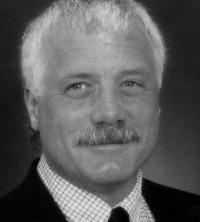
Allan L. Botkin, Psy.D.
|
Iraq/Afghanistan Vets
Dr Botkin is looking for Iraq/Afghanistan veterans who have experienced IADC therapy and are willing to share their stories. If anonymity is desired, it will be honored. Please call Dr. Botkin directly at 847-680-0279.
|
|
|
|
In May 2009, Dr. Botkin provided IADC training to a large group of psychologists and psychiatrists in Heidelberg, Germany. He has been invited to return to Germany regularly. The German translation of Induced After Death Communication will be available in October 2009. For more on the book and European and German IADC therapy and training, go to IADC-therapie.de
|
|
IADC Therapy and Psychotherapist Training
|
Documentary about Induced After-Death Communication
A documentary about induced after-death communication is now being developed. You can see the trailer for the documentary at this link: IADC trailer.
Times Dr. Botkin Is Personally Available to Speak to Callers
Dr. Allan Botkin is available on Tuesdays from 10:00 a.m. until 12:00 noon Central time (CST) to personally answer questions, schedule training in induced after-death communication (IADC®) therapy for counselors, or schedule individual IADC® sessions for anyone interested in having the experience.
Call (847) 680-0279.
|
|
|
|
Scheduling IADC® Sessions with Dr. Botkin
Schedule an IADC® session with Dr. Botkin by calling (847) 680-0279 or sending an e-mail to DrAL53@aol.com. For information about the appointments, click here.
IADC® Training Is Now Available
Dr. Allan Botkin is training licensed psychotherapists in the IADC® procedure. Click here for information about the training.
Dr. Allan Botkin Speaking Engagements
Dr. Allan Botkin, discoverer of the induced ADC procedure, is available as a speaker at gatherings and on radio and television talk shows. He has spoken to radio and television audiences around the world, and at both the Chicago chapter and international meetings of the International Association for Near-Death Studies (IANDS). For information about the session or IANDS, call (847) 251-5758. The Chicago IANDS Web site is at http://www.chicagoiands.org .
|
IADC Information and Resources
|
About Induced ADC's
After years of a growing number of psychotherapists inducing ADC's with thousands of patients, we have come to these profound conclusions:
- We can very rapidly, reliably, and easily induce an IADC® in nearly everyone who goes through the induction.1 (See required conditions at the end of this page.)
- Many patients report the same experiences described by people who have had a near-death experience (NDE) or after-death communication (ADC), although we suggest that the experience of feeling a reconnection is the critical activity, without implying the source of the perception.
- IADC® therapy offers a method of relieving the prolonged suffering of millions of people. Consistent clinical observations indicate that IADC® therapy heals the deep sadness associated with a friend or loved one's death, and the results hold up over time.
- This promising new approach awaits independent, controlled scientific studies such as those planned by Professor Jan Holden at North Texas University.
- The therapy method also provides researchers with a psychological event sufficiently similar to NDE's and ADC's to use in understanding the nature of these phenomena and why they so dramatically relieve people's grief. And while IADC® therapy is unusual and will continue to be controversial until it becomes commonly used, anyone who wishes to verify its efficacy may explore the method at will, just by engaging in a session with a qualified therapist and experiencing an IADC® firsthand.
Therapists trained in the use of EMDR and IADC® are available now for sessions and more are being trained.
Link for Forums, the Spiritual, and Research
Dr. Botkin uses the therapy method because it heals grief, but does not suggest or endorse spiritual implications. For discussions of spiritual issues, link to youreternalself.com. The Web site was developed by Dr. Hogan, co-author of the book describing induced after-death communications. Dr. Hogan's Web sites are not affiliated with Dr. Botkin.
|
|
Induced After-Death Communication:
A New Therapy for Healing Grief and Trauma
A Hampton Roads Best Seller for 2006, 2007, and 2008
A full explanation of the discovery explained here is in the book, Induced After-Death Communication: A New Therapy for Healing Grief and Trauma.
Purchase the book
from Hampton Roads at this link:
Dr. Botkin's Research
Botkin, A.L. and Hogan, R.C. (2005). Induced After Death Communication: A New Therapy for Healing Grief and Traumatic Loss. Hampton Roads Publishing Company.
*Botkin, A.L. (2000). The induction of after-death communications utilizing eye-movement desensitization and reprocessing: A new discovery. The Journal of Near Death Studies. Vol.18, No.3, spring 2000.
Botkin, A.L., Paddock, K., Lambert, D.F., and Lipke, H.J. (1998). The intensive trauma program (ITP) at the North Chicago VA Medical Center: A new approach to the treatment of traumatic memories. Presented at the Hines VA PTSD Outcome Symposium (September 24, 1998).
*Lipke, H.J. and Botkin, A.L. (1992). Case studies of eye movement desensitization and reprocessing (EMDR) with chronic post-traumatic stress disorder. Psychotherapy. 29, 591-595.
*Dalton, J.E., Pederson, S.L., McFarland, R.E., and Botkin, A.L. (1991). Profile of the PTSD personality research form. VA Practitioner, 8 (8), 61-66.
*Botkin, A.L., Schamltz, L.W., and Lamb, D.H. (1977). Overloading the left hemisphere in right-handed subjects with verbal and motor tasks. Neuropsychologia, 15, 591-596.
*Houston, B.K., Olson, M., and Botkin, A.L. (1972). Trait anxiety and beliefs regarding danger and threat to self-esteem. Journal of Consulting and Clinical Psychology, 38 (1), 152-156.
*Research published in a peer-reviewed journal
|
Trained Therapists Available Today
The following therapists have been trained to perform IADCs®. You may call them to schedule an appointment for grief therapy, normal therapy, or IADC® inductions.
Inclusion on the list is not intended by Dr. Allan Botkin and The Center for Grief and Traumatic Loss, LLC, as an endorsement of professional or ethical competence.
United States
Karen Bashawaty, MA, LLP, LPC
Bloomfield Hills or Southfield, Michigan
248-557-4006
k-bash@comcast.net
thegiftof-forgiveness.com
Mary Jo Belongea, MA, LLP
Ann Arbor, MI 734-669-9199
Andrea Bowes, MS, LPC
Milwaukee, WI 414-278-7980 x105
AndreaBowes@TherapiesEast.com
Katelyn Daniels, LCPC
Schaumburg, IL 847-490-1295
katelyndaniels@aol.com
Susan J. Darlington, Ph.D.
Bloomfield Township, MI 248-626-7030
docsusan@gmail.com
Cynthia Davidson-Reid, M.S., LMSW
New York, NY 212-580-1523
cdrcoach@rcn.com
Donald Dufford, Ph.D.
San Jose, CA 408-559-9088
Soquel, CA 831-479-1960
DonDufford@aol.com
Rev. Blane W. Ellsworth, M.Div, MA
Napa, CA 707-252-1156
RevBlane@comcast.net
Marina Ferrier, Ph.D.,LCPC, MFT
Sandpoint, ID 208-265-2271
marinaferrier@aol.com
Christina Fritsch M.A., L.P.C.
Sparta, NJ
973 729 0644
encfritsch@juno.com
Mo Therese Hannah, Ph.D.
Latham (near Albany) New York
518-210-2487
mhanah413@aol.com
Dawn Herring, LMFT
Yucaipa, CA 760-217-3490
dawnherringmft@aol.com
Virginia Keena, MA, LLP
24055 Jefferson Ave., Ste 2500
St. Clair Shores, MI
586 447 3115
Gregory G. Lomuti, Ph. D.
Upper Saddle River, NJ 201-934-9467
glomuti1@verizon.net
Kathy L. Heuser, Psy.D., LPC
Burnsville, MN 612-275-9863
www.alternativewellnessresources.com
Jenny Streit Horn, M.S., LPC, NCC
Denton, TX 940-382-6141
jshorn@websentia.us
Stephen Hoyer, Ph.D.
Pittsburg, Kansas
620-249-4194
stephen@freespiritcenter.org
Esther Klein, LCSW
Safety Harbor (near Tampa), FL
727-726-5049
ELJKlein@gmail.com
Lisa Lane, M.A., LPC
Dallas, TX 214-351-5851
or 214-808-4670
lilane7@earthlink.net
|
Dave MacDonald, M.S.W., L.C.S.W.
Atlanta, GA & Asheville, NC
404-524-5005
macaffinc@mindspring.com
Elaine Maher, LCSW
Honolulu, Hawaii 808-551-2251
EMM4602@AOL.com
David Mannelli, Psy.D.
Milwaukee, WI
262-542-3255 (x126)
DFMannelli@msn.com
Graham Maxey, M. Div., M.A., LPC
Arlington, TX 817-939-0800
zephat@swbell.net
Cathy L. Parker, MSW, LCSW
Chattanooga, TN
423-510-1999
clp1988@catt.com
Kathy Parker, Ph.D.
Roselle, IL 773-259-4239
kparkerpsy@aol.com
Eugene Pogany, Ph.D.
Newton, MA 617-969-1104
elpog@aol.com
Greg Rimoldi, MSW, LCSW
Gurnee, IL 847-356-5564
upstreamtravler@sbcglobal.net
Thomas E. Taylor, M.Div., LMMSW, BCETS
Bayside, NY
516-754-8176 nb650c@aol.com
Carl Totton, Psy.D. North Hollywood, CA 818-760-4219
drcarlat@yahoo.com
Gregg Unterberger, M.Ed., LPC
Austin, TX 512-451-9527
gregmerlyn@aol.com
Cesar Valdez, LMSW Ann Arbor, MI 734-929-6574 cesvaldez@gmail.com cesarvaldezlmsw.com
Beth Wechsler, LICSW Mashpee, MA 508-566-9304 bethwmsw@aol.com
Laura Winds, MA, LMFT
Bellingham, WA 360-647-1003
lawinds@nas.com
Rochelle Wright M.S. LMHC CDP
Gig Harbor, Washington (near Seattle/ Tacoma) 253 851-3498 rwmind@msn.com
Lauren M. Zarozny, MA,
LPCC, NCC
Santa Fe, NM
505-577-1309
laurenzarozny@gmail.com
Pati Zimmerman, MSW, Ph.D.
Clackamas, OR (near Portland)
503-657-7207
pazimmerman@comcast.net
|
Australia
|
Tony Gee BA, GradDipEdPsych, MSuicidology
Victoria, Australia
(03) 9077 8668
amgee@optusnet.com.au
Canada
Marielle Robitaille, MS Psych.
Québec, Canada 418-931-7557
mrobitaille9@sympatico.ca
www.marielle.robitaille.psycho-quebec.ca
Languages: French and English
|
| |
Central and South America
Martha Escamilla R.
Bogota - Colombia
www.traumatreatments.com
|
|
Europe
|
England
Deborah M. Fish, M.Sc.
N. Lincolnshire, UK
(01724) 711329
deb_m_fish@hotmail.com
www.deborahfish.com
Germany
Bergmeister, Herbert, Arzt
72072 Tubingen
0049-(0)7071- 551313
herbert.bergmeister@t-online.de
Erdmann, Claudia, Dipl.-Psych.
13467 Berlin
0049-(0)030-4047081
cl.erdmann@web.de
Geisler, Barbara, Aerztin
76133 Karlsruhe
0049-(0)721-9338443
Goetz, Luy, Dipl.-Psych.
66709 Weiskirchen
0049-(0)6876-864
goetz.luy@gmx.net
Grodhues, Juliane, Dipl.-Psych.
Certified IADC Trainer
66119 Saarbrucken
0049-(0)6805-913368
JGrodhues@t-online.de
Hertel, Reinhard, Dipl.-Psych.
88214 Ravensburg
0049-(0)751-16317
reinhard-hertel@versanet.de
Hortlik, Thomas, Dipl.-Psych.
46284 Dorsten
0049-(0)2362-709007
info@praxis-hortlik.de
Kopp, Renate, Dipl.-Psych.
82279 Eching
0049-(0)8143-1080
praxis@renate-kopp.de
Pols, Andreas, Arzt
57319 Bad Berleburg
0049-(0)2751-2903
andreas.pols@t-online.de
Reeb-Faller, Regina, Aerztin
76227 Karlsruhe
0049-(0)721-6605416
praxis@dr-reeb-faller.de
Singer, Cornelia, Aerztin
79106 Freiburg
0049-(0)761-2921030
cosijo@web.de
Steinbrecher, Barbara, Dipl.-Psych.
76855 Annweiler
0049-(0)6346-698257
barbara.steinbrecher@web.de
Austria
Hefel, Lester, Psychotherapeutin
6850 Dornbirn
0043-(0)650-3726011
inge.hefel.@aon.at
Spain
Brendamour, Vera, Psychotherapeutin
07015 San Agusti
Palma de Mallorca
0034-(0)971- 703348
|
|
|
Friends of IADC
A Psychotherapist Describes Her Experiences with IADCs
We recommend that you look in on Hania Stromberg's Web site to read her experiences with doing IADCs. She had been convinced that grief therapy must be anchored in an awareness of the ongoing connection with the deceased before she learned of Dr. Botkin's induced after-death communication method. She attended training and became proficient in inducing ADCs in her therapy.
|
|
Inquire Within Counseling and Development Center
Inquire Within Counseling and Development Center is owned by Shannon and Graham Maxey. The Center offers IADC therapy, counseling, and other services.
http://www.inquirewithin.net/ http://www.lovebeyondlife.com/
The ADC Project
If you are in grief over the loss of a loved one, we encourage you to go to the Web site set up by Bill and Judy Guggenheim at www.after-death.com.
|
An IADC® Experienced by a Reporter
An article about IADCs®, Al Botkin, and an actual IADC® the reporter experienced follows, reprinted from Conscious Choice (http://www.consciouschoice.com/), November 2003.
Grief Relief: Visiting the Dead
by Julia Mossbridge
A friend of mine died when I was in college, and I blamed myself. Josh was not sure he wanted to come to the dance I was deejaying with his sister, but when I flirted a bit during a phone call he decided to make the drive. He never arrived at the dance -- he was killed by a truck on the freeway. I had mentally tucked away this episode until I heard of a new technique that uses communication with the deceased as a way to heal unresolved grief.
I was pretty sure I didn't have any residual grief about Josh's death. If anything, I felt only guilt about the role I played in it. Nonetheless, I wondered if I could ask Josh's forgiveness for my role in his death. So I called up the doctor who developed this technique, Allan Botkin, who does his work in Lincolnshire, Illinois.
When I walked into Dr. Botkin's office, I was a little taken aback. I guess I had imagined some sort of high-tech machine in a darkened room presided over by a lab-coat clad, bearded, and eccentric character. Instead, the first thing I saw was a two-foot long white stick with a blue marker cap on it. Now really, I thought -- is this it?! A magic wand for seeing dead people? And Dr. Botkin himself, far from a mad scientist type, looked like he belonged at a softball game, giving tips to kids in an avuncular, arm-around-the- shoulder sort of way.
Despite my misgivings, I sat down and listened to his description of "Induced After-Death Communication," which he developed by modifying a biofeedback technique in which the eyes quickly go back and forth. The theory behind this approach is based on the observation that during rapid-eye-movement (REM) sleep, the brain is able to make associations and process information more quickly than during normal waking hours. Imitating REMs in the waking hours is believed to activate the same sort of speedy processing and associative leaps that were previously only attainable during dream states.
Drawing on the decades he spent at the Veteran's Administration treating soldiers with severe grief and trauma, Dr. Botkin explained that each client must be moved from the more superficial emotions -- anger, guilt, and shame -- into the core sadness that he believes is the root cause of the other emotions. He claimed that using his modified technique (www.induced-adc.com) people can safely move through their sadness and release it. Further, about 70 percent of his clients experience after-death communication (ADC) -- reconnecting with the bereaved person in a realistic, joyful, inner vision.
As he described the methodology for me in his frank, no-frills way, every one of my intellectual bells went off to tell me that he was pulling my leg. At the same time, I had a strong gut feeling that said he was onto something. Being a good scientist, I trusted my gut. I let him do a short session with me, even though I told him I had no grief.
One minute later, after simply looking at the moving wand and listening to him gently ask me to get in touch with my grief, I was filled with images of my last fateful interaction with Josh. I watched some more waves of the magic wand and started to cry, seeing images of his death. As my sadness began to wane, I got in touch with a happy memory of Josh. Then I closed my eyes and actually had an ADC.
Simply, without pretense, I saw Josh walk out from behind a door. My friend jumped around with his youthful enthusiasm, beaming at me. I felt great joy at the connection but I couldn't tell whether I was making the whole thing up. He told me I wasn't to blame and I believed him. Then I saw Josh playing with his sister's dog. I didn't know she had one. We said good-bye and I opened my eyes, laughing.
The experience seemed too simple, too light. There were no trumpets, no bright tunnels, just a conversation with Josh. Dr. Botkin had mentioned that people are surprised by how "normal" ADC seems; I certainly was. He also mentioned that neither the therapist nor the client has to believe in the validity of ADC for it to heal -- grief is resolved through the reconnection, whether real or imagined.
Later I found out that Josh's sister's dog had died, and it was the same breed as the one I had seen in my vision. Yet I still don't know what's real. What I do know is that when I think of Josh, I no longer dwell on the images of me calling him or of his car getting hit. Instead, I see Josh walking toward me, laughing and playing with an angel dog. For now, this is the only kind of proof I need.
Julia Mossbridge, a Chicago-based writer, is also a mother, cognitive neuroscientist, and author of Unfolding: The Perpetual Science of Your Soul's Work (New World Library http://www.unfolding.org/).
To read more case records of induced ADC's, click here.
|
|
Conclusions about IADCs®
It doesn’t matter what you believe, what we believe, or even what the experiencers believe. The IADC® experiences we have induced in thousands of patients result in dramatic life changes that heal grief and trauma in a very short time and are sustained long-term. The technique has worth because it works; it doesn't need for us to agree on a belief system or theory about the source of the phenomenon to support it.
One conclusion is clear: the IADC® induction procedure offers the means to alleviate a great amount of human suffering. There is no greater pain in life than losing a child, a battlefield buddy, or a spouse of many years and feeling disconnected, forever. We lose a part of ourselves when we lose someone so important to us. Now, we can routinely heal this deep pain as well as anger, guilt, and the other emotions resulting from the loss.
1 NOTE:
The IADC® procedure is reliable under these circumstances:
- It is administered by therapists who are fully trained in IADC®.
- The therapist follows the IADC® protocol.
- The client engages in at least three sessions:
- one for the history and to allow the therapist to have a good sense of the issues and individual dynamics
- one for IADC®
- one for follow-up
We do not suggest a source for the phenomenon. It is the act of perceiving the connection that results in remarkable healing of grief and traumatic loss.
|
| |